Cooking Temperatures for Filet Mignon
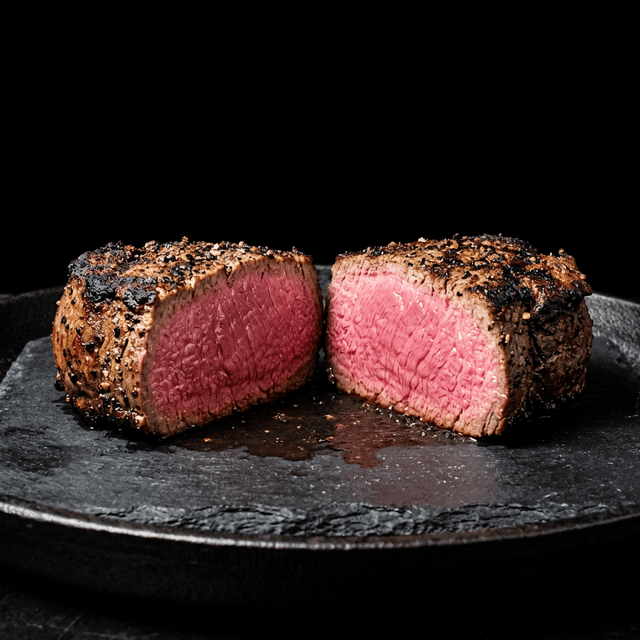
Filet Mignon is the most expensive cut of beef. It lacks fat and relies entirely on a perfect medium-rare center to justify its price.
Delicacy and Lack of Fat
The Tenderloin (from which a Filet Mignon is cut) is an underworked muscle that sits along the spine. This lack of exercise makes it incredibly tender, but it also means it lacks the deep, beefy flavor and heavy marbling of a Ribeye or New York Strip.
Without that intramuscular fat to act as a buffer, a Filet Mignon will ruin rapidly if cooked past medium-rare (130°F – 135°F). At medium-well or well-done, this expensive cut becomes dry and crumbly, which is why knowing the core targets for steak is so essential. For such an expensive investment, do not guess by touching the meat. Verify perfectly with the ThermoWorks Classic Thermapen.
The Reverse Sear Technique
A filet is often cut very thick—commonly 2 inches or more. Searing a steak this thick in a pan from raw typically results in a thick 'bullseye' of overcooked gray meat surrounding a tiny dot of pink center.
To achieve edge-to-edge pink perfection, use the reverse sear: slowly bake the filet in a 250°F oven until the center reaches 115°F. Since the exterior of the meat has dried out in the oven, you can transfer it to a blisteringly hot cast iron skillet for a quick, 60-second sear on each side to create a beautiful Maillard crust without raising the internal temperature too far.
Affiliate disclosure: Some links on this page are affiliate links. If you make a purchase through them, CookingTemps.com may earn a small commission at no extra cost to you. Shopping through these links helps support the site so we can keep creating helpful guides—thank you!