Stop Ruining Pork: The Modern Cooking Temperatures
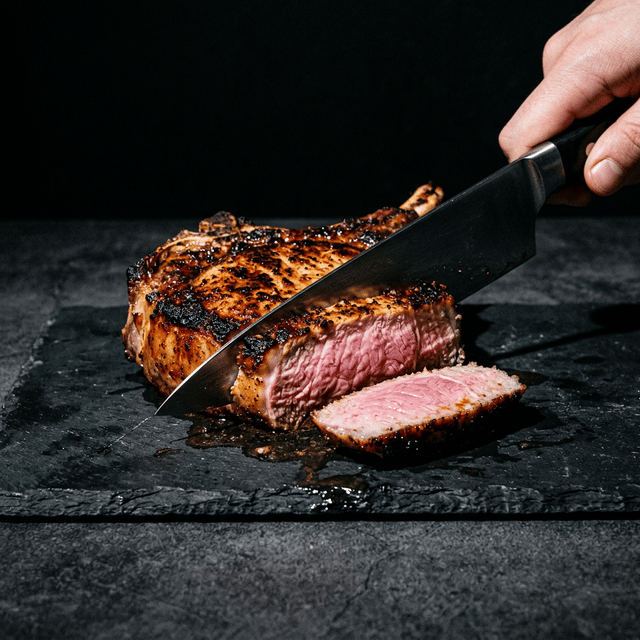
Why is pork always served dry and gray? Discover the modern FDA guidelines that finally allow for juicy, pink pork.
The Legacy of Trichinosis
If you grew up eating pork chops that resembled shoe leather, you aren't alone. For decades, the FDA recommended cooking all pork to a punishing 160°F (71°C) to prevent Trichinellosis, a disease caused by the Trichinella parasite.
Modern farming practices have virtually eradicated Trichinella from commercial pork supplies. In 2011, the USDA finally updated their guidelines, lowering the safe cooking temperature for whole cuts of pork to 145°F (63°C), followed by a mandatory 3-minute rest.
At 145°F, pork is beautifully rosy pink in the center, incredibly juicy, and completely safe. Still nervous about undercooking? You can trust your results completely by using an industry-standard thermometer like the ThermoWorks Classic Thermapen.
Ground Pork vs. Whole Cuts
It is extremely important to differentiate between whole cuts (like tenderloins, chops, and roasts) and ground meat (like sausage).
While a pork chop is safe at 145°F, ground pork must still be cooked to 160°F (71°C). The grinding process takes surface bacteria and mixes them throughout the interior of the meat, meaning the center must be pasteurized instantly to ensure safety (learn more about pasteurization in our chicken cooking guide). For quick checks on smaller items like sausages, a budget-friendly but accurate tool like the ThermoWorks ThermoPop 2 is perfect.
Affiliate disclosure: Some links on this page are affiliate links. If you make a purchase through them, CookingTemps.com may earn a small commission at no extra cost to you. Shopping through these links helps support the site so we can keep creating helpful guides—thank you!